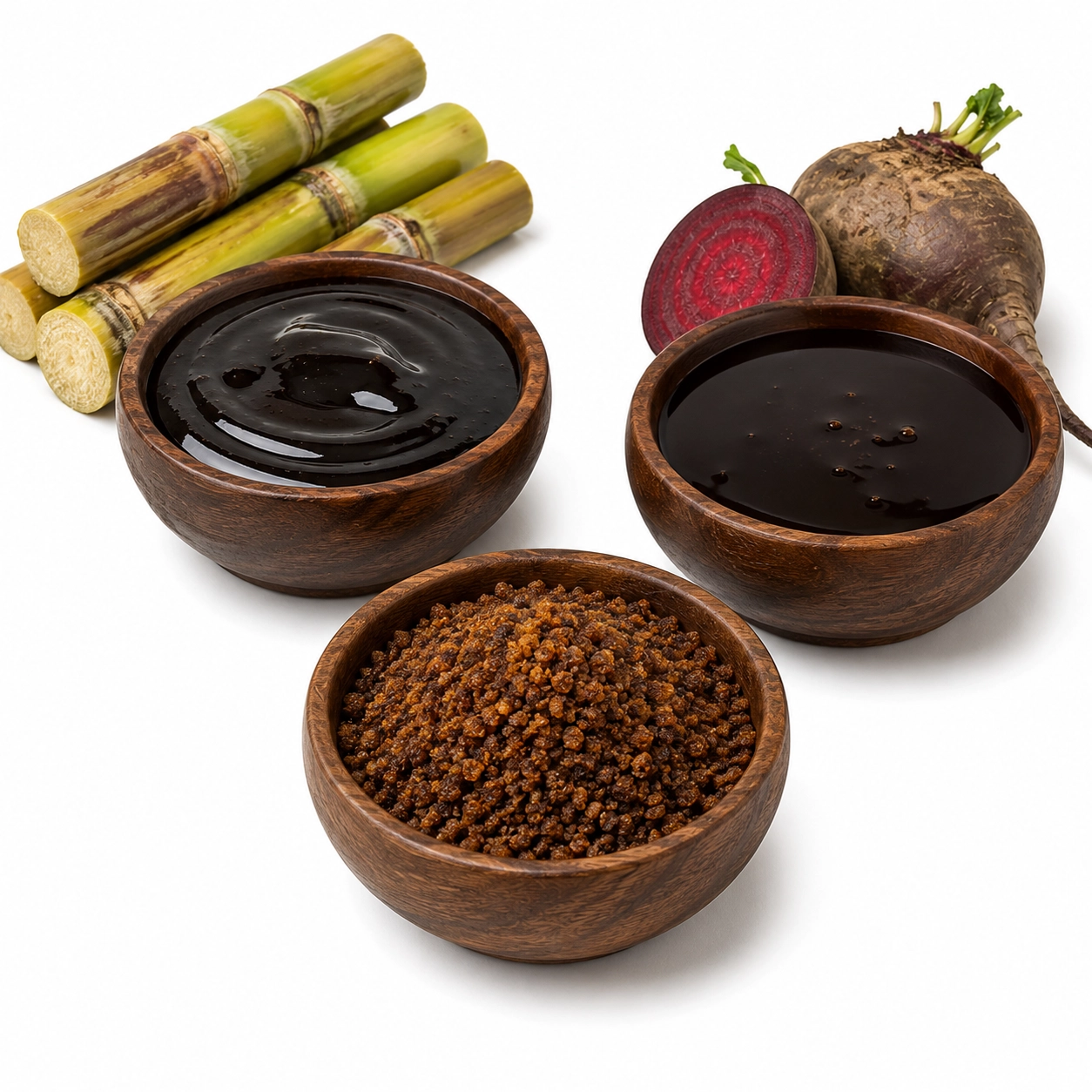
- Light Molasses (First Boiling):
This comes from the very first boiling of the sugarcane juice. It has the highest sugar content, the mildest flavor, and a lighter amber color. It is most commonly used in baking and as a pancake syrup.
- Dark Molasses (Second Boiling):
After a second boiling and sugar extraction, the syrup becomes darker, thicker, and less sweet, with a slightly bitter edge. This is the classic molasses used to Flavors ging
- Blackstrap Molasses (Third Boiling):
This is the final byproduct of the third boiling. Virtually all the sucrose has been crystallized and removed, leaving a very dark, thick, viscous syrup with a robust, bitter-sweet, almost smoky flavor. Because it is highly concentrated, it contains the highest levels of minerals.
Nutritional Profile of Blackstrap Molasses
- Blackstrap molasses is widely recognized for its high nutrient density. Unlike refined sugar, a single tablespoon (about 20 grams) of blackstrap molasses provides a significant portion of your daily recommended mineral intake: Common Uses
- Baking & Cooking: Gives gingerbread, ginger snaps, rye bread, and Boston baked beans their signature deep color and warm, caramel-like Flavors.
- Rum Production: Molasses is the foundational ingredient for fermenting and distilling rum.
- Horticulture & Soil Health: Gardeners use unsulfured blackstrap molasses in compost teas to feed beneficial soil microbes, which boosts plant health and natural pest resistance.
- Animal Feed: It is frequently mixed into livestock feed to increase palatability, reduce dust, and supply quick energy and trace minerals.
Application – Liquor, Culinary & Baking, Industrial & Agricultural