
| Feature | Sorghum | Millet |
| Scientific Name | Sorghum bicolour | Several species (e.g., Pennisetum glaucum for pearl millet) |
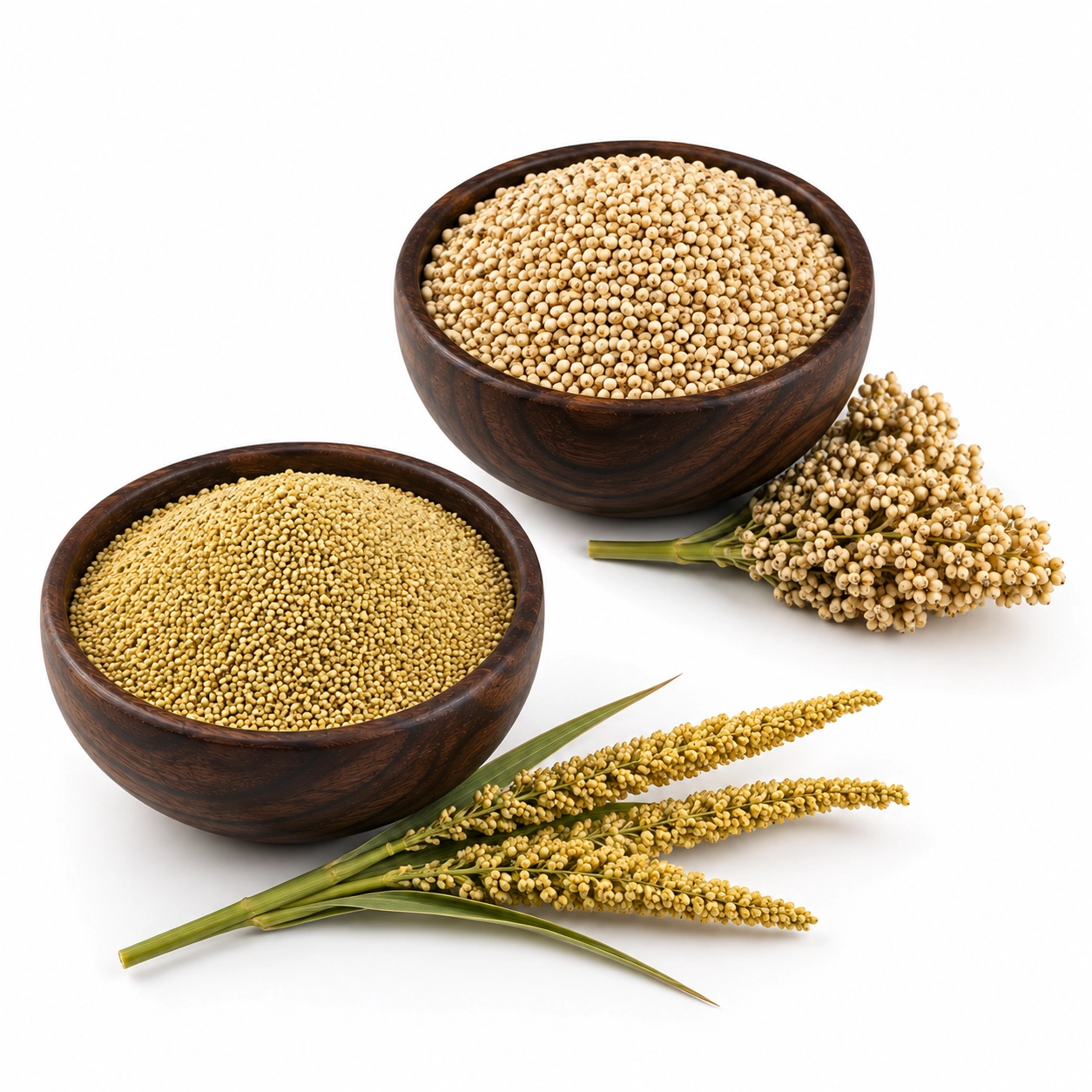
| Grain Size | Larger | Smaller |
| Taste | Mild, slightly sweet | Mild, nutty |
| Plant Height | 1–5 m | 0.5–3 m |
| Climate | Hot, dry regions | Dry and semi-arid regions |
| Uses | Flour, porridge, flatbread, animal feed, syrup | Porridge, flatbread, rice substitute, bird feed |
Nutritional comparison (per 100 g, uncooked)
| Sorghum | Millet |
|
|
Health Benefits
- Naturally gluten-free, suitable for people with celiac disease or gluten sensitivity.
- High in dietary fibre, which supports digestion.
- May help regulate blood sugar due to their relatively low glycaemic impact compared with refined grains.
- Provide important minerals such as iron, magnesium, and phosphorus.
Common Culinary Uses
- Porridge
- Flatbreads and rotis
- Flour for baking
- Grain bowls and salads
- Breakfast cereals
While both are excellent choices, sorghum tends to be preferred for flour and popped grains, whereas millet cooks more like rice and is commonly used in porridges and pilafs